
Every few years, the marketing world collectively loses its mind over a rebrand.
A logo gets flattened and serif evaporates. Someone rotates an icon three degrees to the left and calls it a "future-facing visual ecosystem," then designers spend a week arguing about it on Reddit while LinkedIn confidently declares it either the greatest branding move of the decade or the death of civilization as we know it.
We've become strangely accustomed to the idea that change, by itself, is evidence of progress; if a company isn't unveiling a dramatically different identity every few years, surely it's stagnating. So when Coca-Cola announced a global brand refresh, I expected exactly that. If anyone has earned the right to reinvent itself, it's one of the most recognizable brands on the planet.
Instead, Coca-Cola looked at more than a century of brand equity and essentially said, "Why not just lean into the parts people already love?" That's a remarkably confident decision in an era where brands often mistake novelty for relevance.
The brief given to Jones Knowles Ritchie wasn't to modernize Coca-Cola for a younger audience or make it feel more like a technology company, and it certainly wasn't about chasing design trends or finding a new visual language. According to the agency, the goal was simply to make Coca-Cola "more Coca-Cola."
Except it wasn't exactly simple. That meant sharpening the assets that have, over the years, become part of everyday life: the Spencerian script, the unmistakable red, the Dynamic Ribbon, the Arden Square, and the overall visual system that people can recognize from halfway down a grocery aisle.
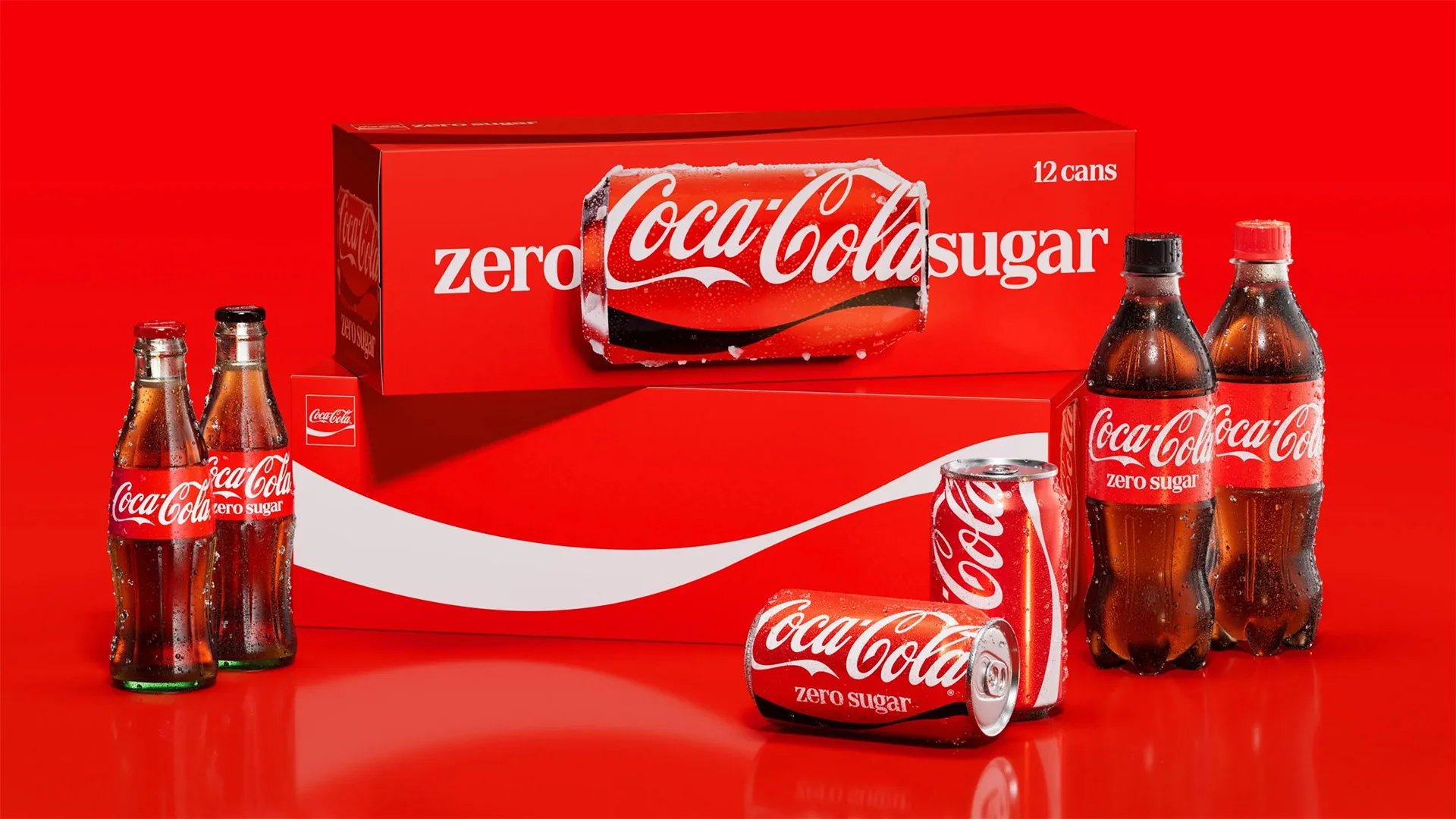
It's easy to underestimate how valuable those things are because they've always been there; we tend to notice what's new far more than what's familiar. But that familiarity is the result of decades of consistency; it's far from an accident.
Rather than introducing an entirely new identity, Coca-Cola refined the one it already owned. The typography became more expressive (although many are likening it to the typeface used by Marlboro cigarettes; the addictive qualities are certainly similar.) The photography leaned into real moments of connection, and the packaging system became more cohesive across global markets. Every decision seemed to ask the same question: How do we make this unmistakably Coca-Cola?
That's a very different question than, How do we make this look new and different?
Branding has become synonymous with transformation. Companies talk about "disruption" as though continuity is something to be ashamed of. Every few years, a business convinces itself that it needs a new personality because the old one has become... what, exactly? Too recognizable? Imagine if your favorite musician released a new album every two years and each one sounded like an entirely different artist. You might admire the experimentation for a while, but eventually you'd start wondering what made them them in the first place.
Brands really aren't that different.
People build relationships with consistency; they recognize colors before they read words and associate certain typefaces, sounds, shapes, and even photography styles with companies they've trusted for years. They're mental shortcuts built through repetition, and every time a brand abandons those cues in pursuit of something trendier, it asks its audience to start learning all over again. Just take a look at the 2009 Tropicana incident.
Marketing people love talking about awareness, impressions, engagement, and reach, but the branding geeks have always known: recognition doesn't get nearly enough credit.
Recognition is the reason someone spots your product in a crowded aisle without consciously searching for it. It's why you can identify a McDonald's from the highway with nothing more than a glimpse of yellow, or why you instinctively know whether a can on a shelf belongs to Coke or Pepsi before you've even processed the label.
Those associations aren't built through repeated dramatic reinventions. They're built through years, sometimes decades, of saying the same thing in slightly better ways. And consistency has a compounding effect; every campaign reinforces the last one, each package strengthening a memory that's already there and every advertisement adding another layer instead of replacing the foundation beneath it.
That's exactly what Coca-Cola's refresh feels like. It's benefiting from its own history rather than erasing it.
What makes this refresh particularly interesting is that it doesn't feel isolated. Over the past few months, we've written about Xbox returning to its iconic green identity after years of visual drift. We talked about Levi's embracing FIFA's strict sponsorship rules instead of fighting them, turning a limitation into one of the World Cup's smartest marketing moments. Now Coca-Cola has chosen refinement over reinvention.
Three very different brands in three very different industries, but they all share the same underlying philosophy. Instead of asking, "How do we become someone new?" they're asking, "How do we become a better version of ourselves?" It's a subtle distinction that requires confidence and restraint, but it changes everything.
None of this is to say brands should never evolve. Some absolutely need reinvention: markets and audiences change, and businesses outgrow old identities or discover that the story they've been telling no longer reflects who they are.
Evolution is healthy, but amnesia isn't. The strongest brands understand the difference between improving the system and abandoning it altogether. They know which parts are timeless and which parts simply need polishing.
Coca-Cola didn't spend the last hundred years building one of the most recognizable identities in history just to throw it away because minimalist logos happened to be fashionable for a few years. Instead, it invested in the things it already owned.
Frankly, that's refreshing.
In a marketing landscape that often treats constant change as a virtue, Coca-Cola reminds us that recognition is still one of the most powerful competitive advantages a brand can have. The goal isn't to surprise people every time they encounter you; sometimes it's simply to remind them why they remembered you in the first place.